Embracing Ao Tu Than: A New Fashion Trend Wave
Nghia Tran
February 5, 2026 • 6 min read
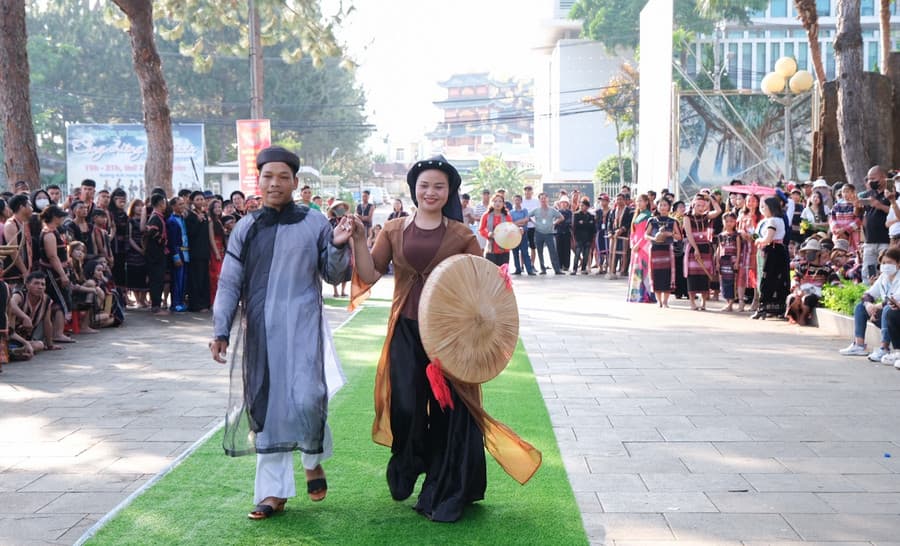
- Ao Tu Than represents a significant resurgence of traditional Vietnamese garment construction methods adapted for contemporary fashion consumption.
- Its structural complexity challenges modern textile engineering, requiring innovative approaches for mass production scalability.
- The global fashion industry is recognizing the cultural and technical value intrinsic to Ao Tu Than, influencing cross-cultural design trends.
- Advancements in sustainable materials and digital textile printing are enhancing Ao Tu Than's applicability in global markets.
- Integrating Ao Tu Than designs promotes diversified representation in fashion, encouraging interdisciplinary research between ethnology and apparel technology.
The Ao Tu Than, historically a traditional four-panel dress from Northern Vietnam, has gained traction in both regional and international fashion circuits. This garment merges cultural heritage with intricate garment architecture, enabling a profound exploration into the convergence of ethnographic aesthetics and modern textile innovation. An examination of Ao Tu Than requires understanding its historic construction, cultural symbolism, and the implications arising from its modern reinterpretations. In this editorial, we delineate the technical dimensions of Ao Tu Than, analyze its influence on global fashion trends, and explore the scientific advancements facilitating its resurgence.
Historical and Cultural Foundations of Ao Tu Than
Traditional Construction Techniques and Materials
The Ao Tu Than (translated as "four-panel dress") is defined by its distinctive modular composition of fabric panels, meticulously sewn to create a garment that is both functionally versatile and symbolically rich. Historically composed of silk or finely spun cotton, the dress construction involves:
- Four primary rectangular panels: two in the front and two in the back, overlapping to provide coverage and mobility.
- A complementary sash or belt system designed to secure the panels efficiently, accommodating the wearer's posture and movement.
- Precision stitching and hand-dyed patterns reflective of regional motifs and religious symbolism.
This construction applied traditional weaving techniques, often from local sericulture, highlighting the garment's integration with endemic material sciences and artisanal craftsmanship.
Symbolism and Socio-Cultural Significance
The Ao Tu Than transcends mere apparel; it functions as a cultural artifact encapsulating Vietnamese societal values and ethnic identity. The choice of fabric, color palettes, and embroidered motifs convey nuanced social narratives, including marital status, regional origin, and spiritual beliefs. This semiotic layering positions Ao Tu Than as an anthropological vector illuminating gender roles and the intersectionality of dress and identity in Vietnamese communities. Consequently, its revival invites discourse on cultural preservation amidst globalization pressures.
Technical Relevance and Contemporary Manufacturing Challenges
Textile Engineering and Material Innovations
Modern reinterpretations of Ao Tu Than necessitate reevaluating material selections to meet contemporary consumer preferences while retaining authenticity. Synthetic blends and advanced fabric treatments such as moisture wicking, UV protection, and anti-wrinkle finishes are increasingly integrated. However, sustaining the textile's breathability and tactile qualities intrinsic to traditional silk or cotton remains a scientific challenge. Researchers have pursued methods such as:
- Bioengineered silk mimetics via recombinant proteins, ensuring ethical sourcing.
- Eco-friendly dyeing protocols minimizing chemical effluents, in line with sustainable fashion mandates.
- Integration of digital jacquard weaving for replicating intricate traditional patterns with precision.
The balance between material innovation and cultural integrity constitutes a primary focus area for technical developers engaged in Ao Tu Than's production pipeline.
Scaling Production and Maintaining Craftsmanship
While Ao Tu Than's handcrafted nature is central to its cultural value, scaling production for international markets imposes technical dilemmas. Automated sewing systems struggle to replicate the asymmetric layering and manual fastening techniques inherent in the garment. Attempts to mechanize such elements have led to innovations in modular garment design and bespoke assembly line configurations:
- Hybrid manufacturing, combining machine-assisted cutting with hand-embellishment stages.
- Development of adjustable fastening mechanisms to replace traditional sashes, enhancing ease-of-use without compromising aesthetics.
- Use of digital pattern grading software accommodating diverse body types while preserving traditional structural proportions.
This hybrid approach supports maintaining artisanal quality at a scale conducive to commercial demands.
Global Fashion Impact and Cultural Integration
Cross-Cultural Design Influences
The Ao Tu Than's architectural silhouette has attracted the attention of global designers exploring hybridization between traditional garments and contemporary apparel. Its modular panel system carries functional and aesthetic advantages such as adaptable layering and dynamic draping, which are being translated across different fashion sub-disciplines. Notably, its influence can be detected in:
- Minimalist fashion movements seeking clean lines coupled with cultural narratives.
- Sustainable fashion sectors emphasizing garments with longevity and modularity.
- Performance wear adaptation, where layering techniques inspired by Ao Tu Than optimize movement and ventilation.
This cross-pollination elevates Ao Tu Than beyond cultural artifact status toward a catalyst for innovation.
Market Reception and Consumer Demographics
Market analytics indicate growing consumer interest in culturally authentic yet modern apparel options. The Ao Tu Than appeals significantly to:
- Millennial and Gen Z demographics emphasizing cultural identity expression through fashion.
- Ethical consumers prioritizing craftsmanship, sustainability, and artisanal provenance.
- Global diaspora communities seeking heritage reclamation through dress.
Such demographics contribute to the garment's upward trajectory within niche and mainstream market segments, urging industry stakeholders to invest in research and development that balances authenticity, wearability, and scalability.
Expert Analysis & FAQ
How does the structural design of Ao Tu Than compare to other traditional East Asian garments?
Ao Tu Than's modular design differentiates it through its four distinct fabric panels arranged symmetrically and controlled via sashes, contrasting with the continuous fabric cuts of garments such as the Chinese Hanfu or Japanese Kimono. This structural modularity permits greater adaptability in body shaping and movement. It represents a unique synthesis of garment architecture and socio-cultural utility, emphasizing layering mechanics rather than flat silhouettes common in other East Asian traditional outfits. Such differences highlight diverse approaches to textile usage linked to environmental and cultural factors.
What are the main challenges in digitizing Ao Tu Than patterns for modern manufacturing?
Digitization must accurately translate the asymmetrical overlaps and length gradations of traditional Ao Tu Than patterns into CAD formats without losing dimensional authenticity. This includes:
- Capturing manual stitching variances.
- Integrating fabric stretch properties.
- Adapting to variable fastening tensions inherent in sash closures.
Digitally encoding these nuanced elements requires advanced 3D pattern mapping and AI-assisted design systems that simulate drape dynamics as part of the development cycle, which remains an area of ongoing research.
How does Ao Tu Than contribute to sustainable fashion initiatives?
Ao Tu Than's emphasis on high-quality natural fibers, longevity through modular design, and artisanal craftsmanship aligns well with sustainability goals in fashion. The garment's structure favors repair and customization over disposable fashion cycles, reducing waste. Additionally, the revival of traditional dyeing and weaving processes often employs low-impact environmental techniques. By valuing cultural heritage and slow fashion principles, Ao Tu Than exemplifies strategies that diminish environmental footprints while reinforcing socio-economic sustainability among artisan communities.
What future technologies could further enhance Ao Tu Than's production and appeal?
Emerging technologies such as 3D knitting, augmented reality (AR)-based tailoring systems, and smart textiles could revolutionize Ao Tu Than production and consumer interaction. 3D knitting allows complex panel constructions without seams, reducing labor-intensive assembly. AR technologies can provide custom fitting solutions, preserving traditional proportions across varied body morphologies efficiently. Smart textiles could integrate temperature regulation or bio-monitoring functions while maintaining aesthetic fidelity, thus expanding Ao Tu Than's applicability into activewear and high-performance sectors. These prospects represent interdisciplinary collaboration frontiers between ethnology, material science, and fashion technology.